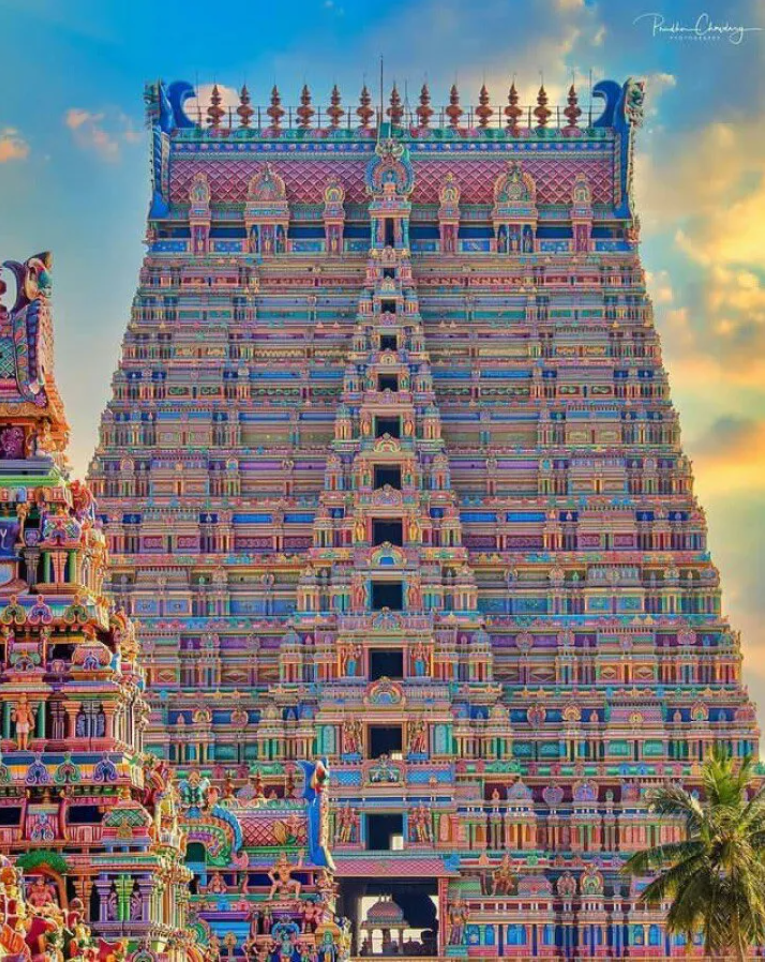
The Skyscrapers of Then
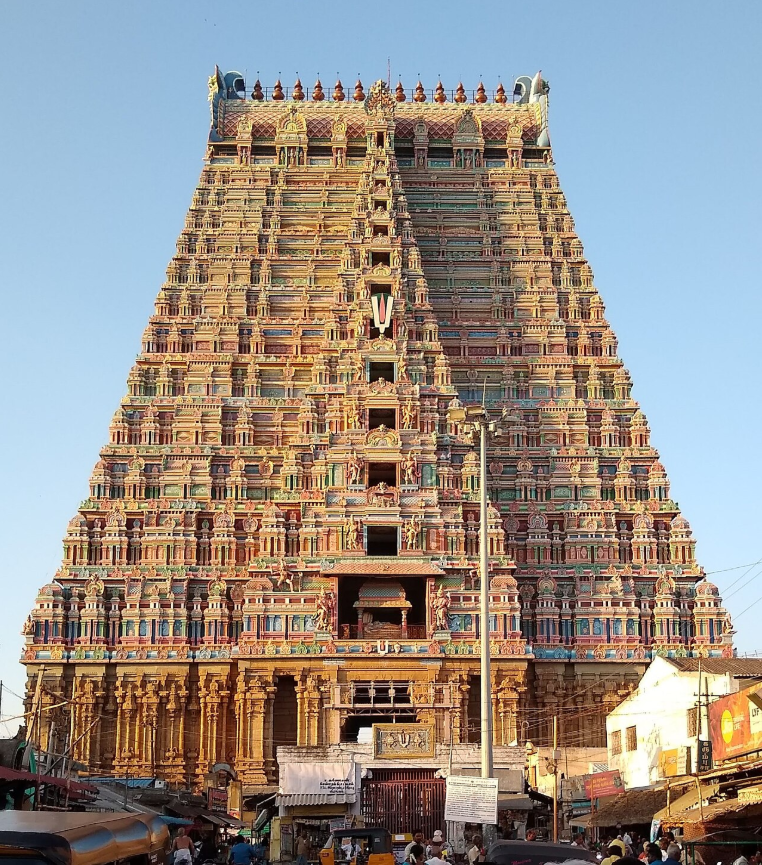
Some places refuse to fit inside the camera frame, no matter how hard you try to squeeze them in.This time, it was the Rajagopuram of the Srirangam temple complex.I stood outside the Rajagopuram and looked up. And kept looking up. Bending my neck like a crane, I followed its towering form all the way to the top, nearly 240 feet above.Phew!The sheer scale commanded both respect and awe. This was not a concrete tower clad in glass and steel. It was stone. Stone carved, lifted, assembled, and perfected through the immense effort, skill, and dedication of our ancestors.At that moment, a thought struck me.
These were the skyscrapers of then.
Not built by corporations.
Not built by developers.
Not built to maximize profit.
Built because someone believed that devotion deserved to touch the sky.If the height was breathtaking, so was the scale of the world it enclosed. The Srirangam temple complex spans roughly 156 acres, making it less a temple and more a self-contained city. Seven concentric walls, twenty-one gopurams, a marvel of planning as much as a city of faith.Merchants, priests, artisans, musicians, dancers, farmers, scholars, and pilgrims. Entire generations lived within the temple; it was not only a place of worship.
It felt more like navigating a small town than visiting a temple.
It was an ecosystem.
Walking through its vast corridors and mandapams, I finally understood something that had puzzled me for years: why were kings revered with such devotion? Kingdoms have disappeared, but monuments answer this question.
Kings were funding a civilization.
The temple employed thousands. It nurtured art, music, architecture, literature, and learning. It sustained craftsmen and traders. It provided a center around which society could organize itself. Faith may have been its foundation, but community was its outcome.As I stood watching devotees stream through gateways, another realization dawned upon me.
Kings, palaces, thrones, and crowns are all gone, but we remember them today because of what they built for society.
If Srirangam impressed me with its scale, Thanjavur left me speechless with its ambition.
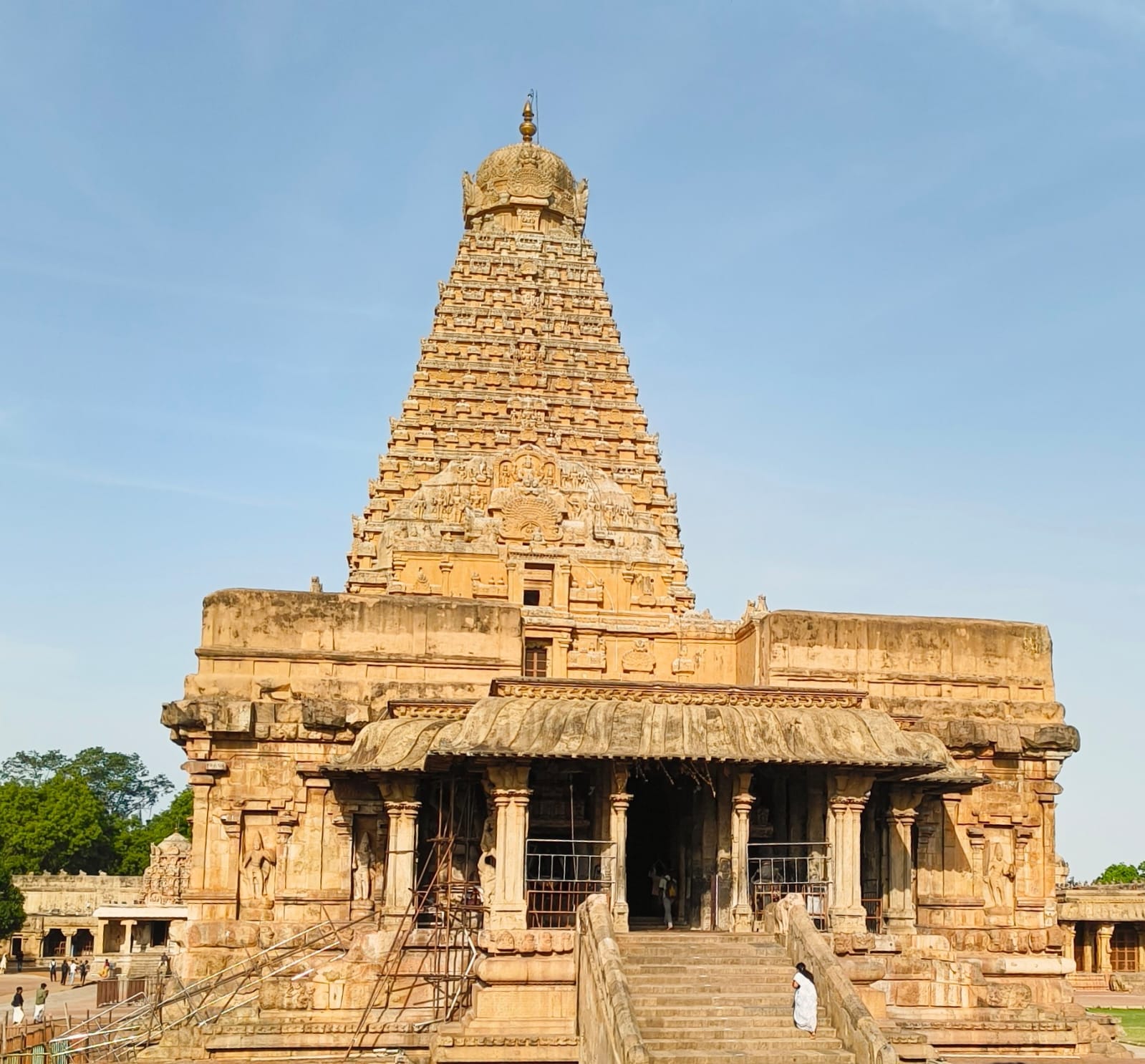
The next day, I stood before another giant: the Brihadeeshwara Temple in Thanjavur.If Srirangam felt like a thriving sacred city, Brihadisvara felt like a declaration carved in stone. Rising over 216 feet into the sky and completed more than a thousand years ago by Rajaraja Chola I, a flag bearer of our sanatana dharma with unparalleled confidence.I tried to imagine the scene in 1010 CE.No cranes.No computers.No hydraulic machinery.Yet someone looked at an empty stretch of land and envisioned a grand granite temple reaching toward the heavens. Did they think a thousand years later people like me would be awestruck at this sight? And somehow, they were right.The tourists came and went. Clicked photos from every possible angle, like it's their own backyard garden.The temple seemed unperturbed by all its surrounding chaos.And the longer I sat there, the more I found myself thinking about power. The kings transformed the power and wealth they wielded into something greater than themselves.As the evening sun turned the granite golden, I sat quietly and watched the shadows stretch across the courtyard.
For a moment, the thousand years between Rajaraja Chola and me disappeared.
One man had imagined this.
Millions had benefited from it.
That is what power looked like when it served something larger than itself.
That thought inevitably led me to compare their world with ours.Today's rulers, whom we call politicians, command budgets larger than many ancient kingdoms. They possess technologies that medieval engineers could never have imagined. They have access to expertise, infrastructure, and resources beyond anything available to the builders of Srirangam or Thanjavur.And yet, all they have is a narrow vision of the next election. The next headline.The next accumulation of wealth, power, or influence.The old rulers sought immortality through creation.Many of today's powerful seem content with inheritance.One built monuments that fed generations. The other often seems to build fortunes meant to feed only their own families for generations.
Ask this uncomfortable question:What should power be used for?
Sadly, the purpose of power has changed.The old rulers measured success by what they left behind for society. Too many of today's rulers seem measured by what they can accumulate for themselves and their descendants.
A thousand years later, I remembered neither the king's throne nor the wealth he possessed.
I remembered what he built.